FEIS
- 4.1
- Rating
- 10.00K
- Installs
- Free
- Price

 Analysis by App-foxy
FEIS is the kind of music app that makes sense only when you have a clear connection to Irish dance. I found it much more focused than a general streaming service, because its purpose is not to cover every listening mood. It is built around Irish dance music, giving dancers, teachers, musicians, and families a more direct way to find material suited to practice and performance. My overall view is positive: FEIS is most useful as a practical dance companion, not as an all-purpose music player.
The app comes from FEIS LIFE APP LTD and sits in the Music & Audio category. It is free to install, with optional in-app purchases ranging from $1.49 to $12.99 per item. That combination makes it easy to try without committing immediately, although anyone planning to use it regularly should pay attention to which content is available without an additional purchase. It is rated for Everyone, runs on Android 8.0 and later, and its current release is version 3.8.5.
Why FEIS works especially well for Irish dance practice
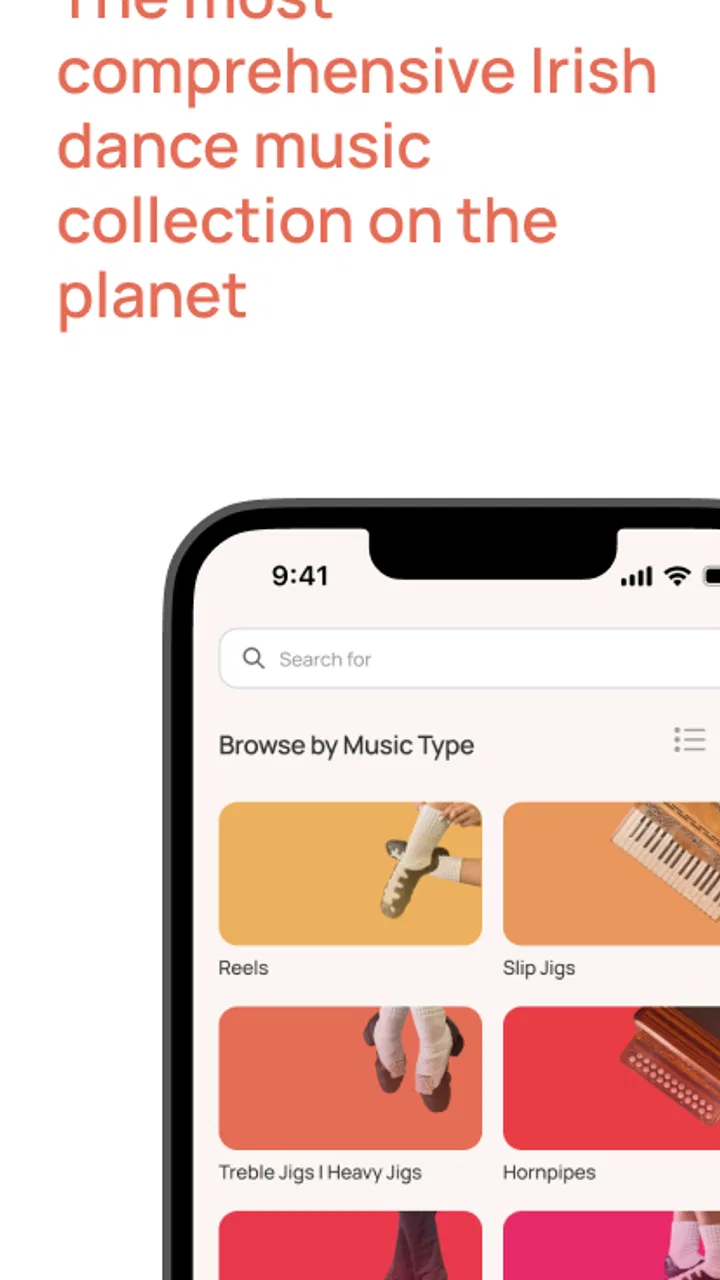
The strongest part of FEIS is its narrow purpose. A normal music service may contain Irish dance recordings, but finding the right tune, tempo, or style there can involve searching through unrelated albums, inconsistent naming, and tracks intended for listening rather than movement. FEIS approaches the problem from the dancer’s side. Instead of asking me to build a useful practice library from scratch, it presents itself as a dedicated home for Irish dance music.
You May Also Like

 Blood Strike: 2.5 Anniversary
Blood Strike’s Loadouts Turn Every Drop Into a Tactical Gamble
A close look at Blood Strike’s custom loadouts: how fast access to signature weapons reshapes its battle royale rhythm, rewards preparation, and narrows the gap between fights.

 Pandora - Music & Podcasts
Pandora’s Music Is Easy to Start, but Harder to Recover
Pandora’s strength is its low-effort path from a seed to a station. Its weak spot is how much confidence it asks you to place in connection, setup, and quiet recovery.

 8 Ball Pool
 Is Built on Rivalries, Rematches, and Routine
A close look at the rivalries, rematches, shared routines, and unanswered safety questions that turn a quick pool match into a persistent mobile community.

 Samsung Music
’s Quiet Strength Is Playing What You Already Own
Its reach comes less from spectacle than from dependable access to a personal library. That simplicity is both the app’s strongest retention engine and its ceiling.

 AccuWeather: Weather Radar
AccuWeather Review: A Quick, Clear Forecast for Everyday Decisions
For everyday plans, the best forecast is the one you can understand quickly. AccuWeather makes rain timing, radar, and local conditions easy to act on, with a few trade-offs.

 Hill Climb Racing
Why Hill Climb Racing Still Turns Crashes Into One More Run
A tiny car, a bumpy hill and one more upgrade: Hill Climb Racing keeps resurfacing because its simple chaos makes every near-miss feel personal.
More From Our News Desk
View All News


That focus changes how I would use it. I would not open FEIS casually while looking for background music during a commute. I would open it before a class, rehearsal, or competition preparation session, when I already know that I need music connected to a particular dance activity. The app’s value comes from reducing the distance between “I need something to practise with” and actually starting.
For a beginner, that can be less intimidating than browsing a huge general catalogue. New dancers often know the name of a dance or the kind of rhythm they need, but not which artists, recordings, or albums to search for. A specialist app gives the experience a more relevant starting point. I still recommend checking the selected track before beginning a serious session, but the overall context is far more useful than a random search in a mainstream streaming app.
Its audience is also wider than individual dancers. A teacher could use it to prepare a classroom playlist, while a parent might use it to help a child practise at home without spending time hunting through unrelated music. A dance school could treat it as a shared resource, provided everyone understands which parts of the catalogue require payment. Musicians and enthusiasts may also appreciate having a dedicated place to explore recordings connected to the Irish dance world.
A better workflow than searching song by song
One practical way to get more from FEIS is to use it as part of a repeatable practice routine rather than opening it only when you are already on the floor. I would first decide what the session is meant to improve: timing, endurance, transitions, or confidence with a particular dance. Then I would choose music that supports that goal and keep the session focused instead of jumping between unrelated tracks.
This matters because music selection can quietly affect practice quality. If every recording is chosen at random, it becomes harder to tell whether a mistake comes from technique or from an unfamiliar musical feel. A specialist app can help create consistency. Reusing a small group of suitable recordings lets me concentrate on footwork and posture, then introduce different material later as a test of adaptability.
A second useful approach is to separate learning from performance preparation. During early practice, I would favour recordings that make the beat easy to follow. Once the steps feel secure, I would switch to a less familiar selection to see whether I can maintain timing without relying on memorisation. That two-stage workflow is more effective than playing the most exciting track from the beginning of every session.
For teachers, the app may be most useful when prepared in advance. Rather than handing students a phone and asking them to search during class, I would select the material before the lesson and organise the order around the exercises. That avoids interruptions and keeps attention on instruction. It also makes the app feel less like a catalogue and more like a teaching tool.
Where the specialist approach beats general music services
General streaming platforms still have important advantages. They usually offer broader catalogues, familiar recommendation systems, stronger support for mixed listening habits, and a better fit for someone who wants one app for every genre. If I wanted Irish dance music alongside pop, podcasts, classical recordings, and personal playlists, a mainstream service would probably be more convenient overall.
FEIS has a different advantage: relevance. A broad platform may be powerful, but its search results are shaped around a huge variety of listeners. FEIS is easier to justify when the main question is not “What should I listen to?” but “What music will help me work on Irish dance?” That distinction is important. The app does not need to outperform a general service at everything; it needs to remove unnecessary searching for this particular activity.
I also prefer a specialist environment when I am trying to stay disciplined. A general service can tempt me into unrelated recommendations, while a focused dance app keeps the session closer to its purpose. That may sound minor, but it helps when practice time is short. A few minutes saved from browsing can become another repetition of a difficult sequence.
There is a trade-off, though. A narrow catalogue can feel limiting if I want to compare several musical interpretations, discover unrelated artists, or enjoy a broader cultural listening session. FEIS is not the obvious replacement for a full music subscription. I see it more as a targeted addition, especially for users who already have another service for everyday listening.
The free entry point and the purchase decision
The free price is a sensible way to approach the app. I can install it and decide whether its organisation and available material suit my routine before spending anything. The optional purchases are clearly relevant to that decision, because the free experience may not be enough for someone who needs a large or specialised collection.
My advice is to test FEIS against one concrete need rather than browsing aimlessly. For example, I would check whether it has enough useful material for the dance style I practise, whether the available recordings fit my preferred session length, and whether the playback experience feels comfortable in the room where I train. If the free content already supports that use, the app has earned a place in the routine. If not, I would decide whether a specific purchase solves the problem before buying several items.
This is also where the app may be less appealing to casual listeners. Paying for individual content can feel less convenient than using a subscription that already includes a wide range of music. On the other hand, a dancer who repeatedly uses the same specialised material may prefer paying for relevant items instead of maintaining another broad subscription. The better value depends on frequency and purpose, not simply on the lowest headline price.
Limitations I noticed in the overall concept
The biggest limitation is the app’s narrow audience. If Irish dance is only an occasional interest, FEIS may not become part of daily listening. Its focus is a strength for committed users but a barrier for people who want variety. I would skip it if my main goal were discovering music across multiple genres or replacing a complete streaming library.
Another potential friction is that a dance app needs to fit the physical reality of practice. I want to start music quickly, adjust my routine without breaking concentration, and avoid unnecessary phone handling while moving. Any specialist music app is judged not only by its catalogue but by how smoothly it supports that moment. I would therefore spend time learning the layout before a class or important rehearsal rather than exploring it for the first time in the middle of one.
The purchase model can also make planning less straightforward. A teacher preparing material for several groups may need to think carefully about which recordings are essential and which are optional. A family may want to establish a simple rule about purchases before a young dancer begins exploring. Since the app is suitable for Everyone, that kind of shared decision-making is useful even when the user is a child.
I would also avoid treating FEIS as a substitute for instruction. Music can support timing and repetition, but it cannot correct posture, explain a difficult step, or identify why a dancer is losing balance. The app is strongest when paired with coaching, videos, class notes, or feedback from an experienced teacher. Used alone, it can provide structure, but it cannot provide the full learning process.
Who should install it
I think FEIS is a good match for active Irish dancers who practise outside class and want music chosen for that world. It is particularly suitable for someone who is tired of searching general services for appropriate recordings, or for a parent who wants a more focused practice option for a young dancer. Teachers may also find it useful when building a lesson around consistent musical material.
It is less suitable for a listener who has no practical connection to Irish dance. Someone curious about the tradition may enjoy exploring it, but the app’s real value appears when the music has a job to do. If I were choosing one music app for a household with very mixed listening habits, I would choose a general service first and add FEIS only if a dancer in the family needed its specialised focus.
There is also a useful distinction between beginners and experienced dancers. Beginners may appreciate the focused environment because it reduces the confusion of choosing music, but they should not assume that any recording automatically matches their current level. Experienced dancers may get more value from building varied practice sessions and using the app to challenge their timing. In both cases, the best results come from selecting music deliberately instead of pressing play without a plan.
Everyday use: a realistic home practice session
Imagine a dancer arriving home after class with one sequence still feeling uncertain. I would open FEIS, choose music appropriate to the work from that lesson, and spend the first part of the session marking the steps rather than immediately dancing at full effort. After a few controlled repetitions, I would increase the intensity and use a second recording to check whether the timing holds when the musical feel changes.
That scenario shows the app’s practical strength. It can turn a vague instruction such as “practise at home” into a repeatable activity: select suitable music, warm up with controlled movement, repeat the weak section, and finish with a less familiar track. The app does not create that routine automatically, but its specialist purpose makes the routine easier to maintain.
I would keep the phone positioned where I can control playback without carrying it around, and I would prepare the next selection before starting the most demanding repetitions. That small habit prevents a common problem with music-based practice: stopping every few minutes to search. The less often the session is interrupted, the easier it is to judge improvement honestly.
For a teacher, the same idea works at a larger scale. A lesson can begin with predictable music for technique, move to a more demanding selection for endurance, and end with a track chosen for performance confidence. The important point is not simply having access to music; it is using the app to give each part of the lesson a clear purpose.
How I would decide whether it belongs in my setup
I would judge FEIS on three questions. First, does it help me find Irish dance music faster than my current method? Second, does the available selection support the specific dances and practice goals I have? Third, does the cost of any desired content make sense for how often I will use it?
If the answer to all three is yes, the app is easy to recommend. If I only answer yes to the first question, I would keep the free version as a reference but avoid treating it as my main music solution. If none of the questions applies, a general streaming app will probably be more useful and less specialised for my needs.
The app’s average rating is 4.1 from around 136 ratings, with roughly 23 written reviews, and it has passed 10K+ installs. Those figures suggest a modest but real user base rather than the scale of a mainstream platform. I would not use popularity alone to decide, but the numbers fit the impression of a focused niche tool: it is designed for a particular community, and that community is the right judge of its usefulness.
My verdict
FEIS succeeds because it understands that Irish dance practice needs more than a generic search box. Its dedicated focus, free starting point, and suitability for structured routines make it a worthwhile option for dancers, teachers, and families who regularly need this kind of music. I especially like it as a companion to lessons, where the right recording can make repetition more purposeful and less frustrating.
It is not the app I would choose for broad music discovery, relaxed mixed-genre listening, or replacing a complete streaming subscription. The optional purchases also mean that serious users should test their real practice needs before expanding their collection. Those limitations are fair consequences of its specialised design rather than reasons to dismiss it.
My recommendation is simple: if Irish dance is part of your weekly routine, install FEIS and evaluate it through one planned practice session rather than a quick browse. If it gives you relevant music with less effort than your usual alternative, it has already proved its value. For everyone else, its narrow purpose may make a broader music app the better choice. As a focused tool from FEIS LIFE APP LTD, FEIS is convincing precisely when you want music to support Irish dance, not when you expect it to do everything.
FAQs for FEIS
01What is FEIS and what can I use it for?
FEIS is an application designed to give users access to information and services related to its platform or organization. Depending on the version available in your region, it may help you consult announcements, manage personal information, access digital resources, or stay updated through your mobile device. Before downloading, check the official description to confirm that its features match your needs.
02Is FEIS free to download and use?
The FEIS app may be free to download, although some services, registrations, subscriptions, or activities accessed through it could require payment. The exact conditions can vary according to the country, institution, or account type. I recommend reviewing the app-store listing and any terms shown during registration so you understand possible charges before using premium or restricted features.
03Which devices and operating systems are compatible with FEIS?
Compatibility depends on the version of FEIS published for Android or iOS. In general, the app requires a relatively recent operating-system version and sufficient free storage, but older phones may not support every function correctly. Before installing, compare your device’s Android or iOS version with the requirements shown on the official Google Play or App Store page.
04Does FEIS require an account or personal information?
Some FEIS features may be available without signing in, but services involving profiles, records, notifications, or personalized content commonly require an account. During registration, the app may request information such as an email address, identification details, or contact data. Read the privacy policy carefully and provide only accurate information through the official application or website.
05Is an internet connection required to use FEIS?
FEIS generally requires an internet connection for signing in, synchronizing information, receiving updates, loading online content, or submitting requests. Certain screens or previously downloaded information may remain accessible offline, but this should not be assumed for the entire app. For the best experience, use a stable Wi-Fi or mobile-data connection and keep the application updated.
Pros
- Simple interface makes browsing and posting feel straightforward.
- Supports quick sharing of photos
- videos
- and status updates.
- Useful for staying connected with friends and local communities.
- Notifications help users keep up with new activity.
- Available on mobile devices for convenient access on the go.
Cons
- Some features may feel limited compared with larger social networks.
- Frequent notifications can become distracting without careful settings.
- Content quality depends heavily on the activity of other users.
- Privacy options may require time to review and configure properly.
- Performance can vary on older devices or slower connections.

FEIS
Gallery